Disclosure: I received this complimentary product (Seen and Unseen) through Raincoast Books. Affiliate Links will be used, thank you for your support of my blog, costs you nothing to do so, and is so much appreciated. 
World War 2 was a hard time in history, it brought out the ugly in too many people for a variety of reasons. Hitler brought out the ugly in his determination to create a master race and encourage his people to fight for him. The attack by Japan (at Pearl Harbor) brought out the ugly in the American populace toward Japanese and Japanese/Americans. This is not to say that some beauty didn’t occur during the war either, but sometimes, the biggest thing seen is the ugly.
The Basics of Seen and Unseen
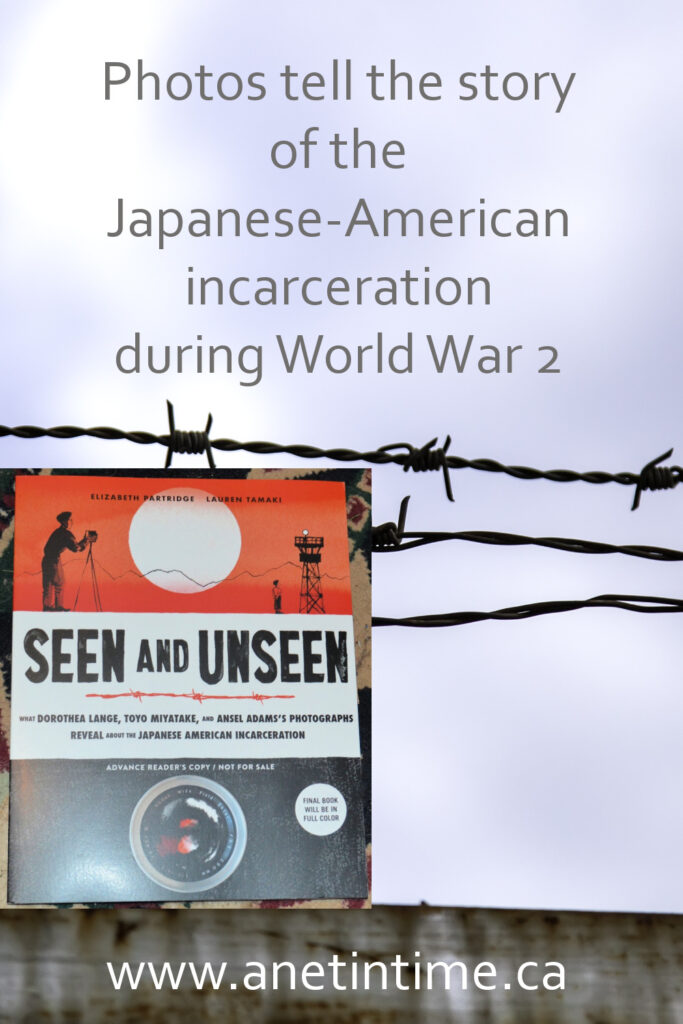
Title: Seen and Unseen: What Dorothea Lange, Toyo Miyatake, and Ansel Adam’s Photographs reveal about the Japanese American Incarceration.
Author: Elizabeth Partridge
Illustrator: Lauren Tamaki
Publisher: Chronicle Books
Formats Available: Kindle, Audiobook, Hardcover
Received: Advanced Readers Copy
Pages: 132
Intended Audience: 10-14 years, 5-9 grade
Reviewed for: Raincoast Books
Author Information: Author of 18 books, this American born former acupuncturist is now a full-time writer. On her website she notes that she is “drawn to pivotal moments in our American history that have been erased from our narrative.” This story fits within that interest. Most of her books are geared for children and middle school readers.
About Seen and Unseen: Three photographers. Three perspectives. And through the lenses of their cameras, three different views of one bitter chapter of American history. What can photographers teach us about the Japanese American Incarceration? Dorothea Lange: hired by the government as a photographic documentor. Toyo Miyatake smuggled photographic equipment into camps to show the true conditions. Ansel Adams was hired to take photos, he was determined to show the resilience of the incarcerated.
Digging Deeper
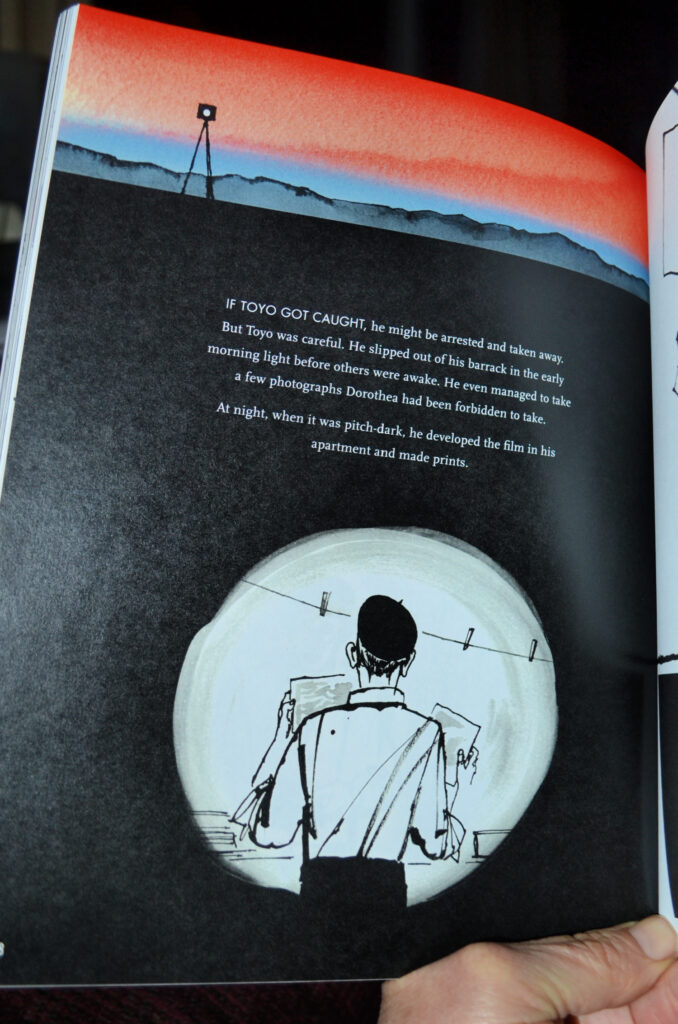
Three Photographers, three different perspectives, one section for each journalistic effort. Photographs and line drawings fill the pages. Since I received an advanced reader’s copy, most of the pages I saw were in black and white. A few were in colour.
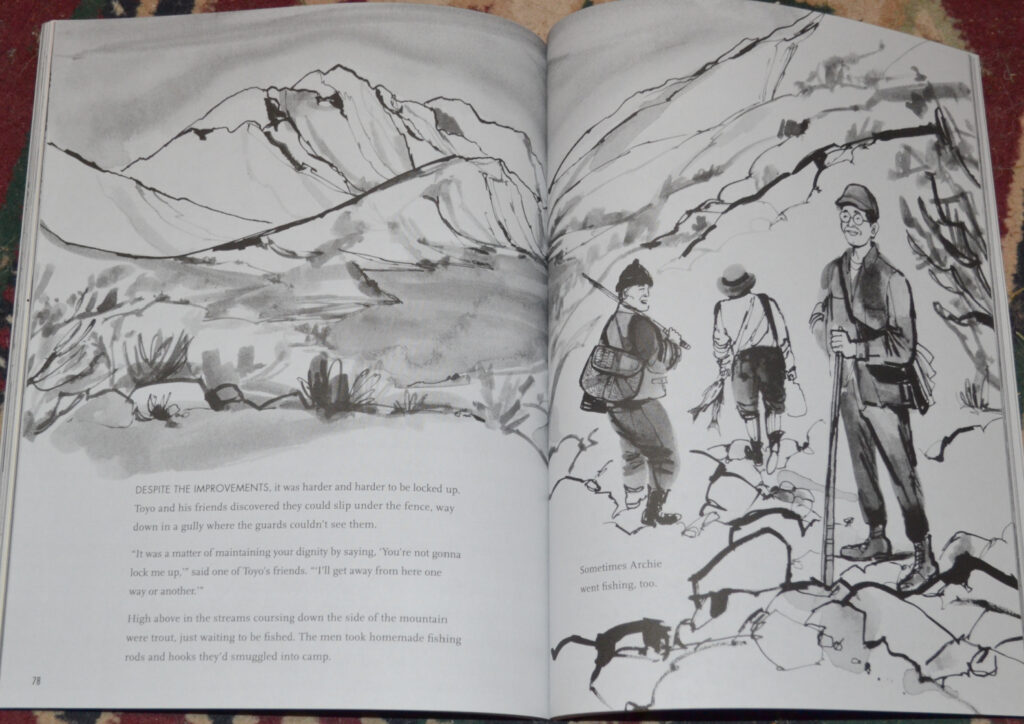
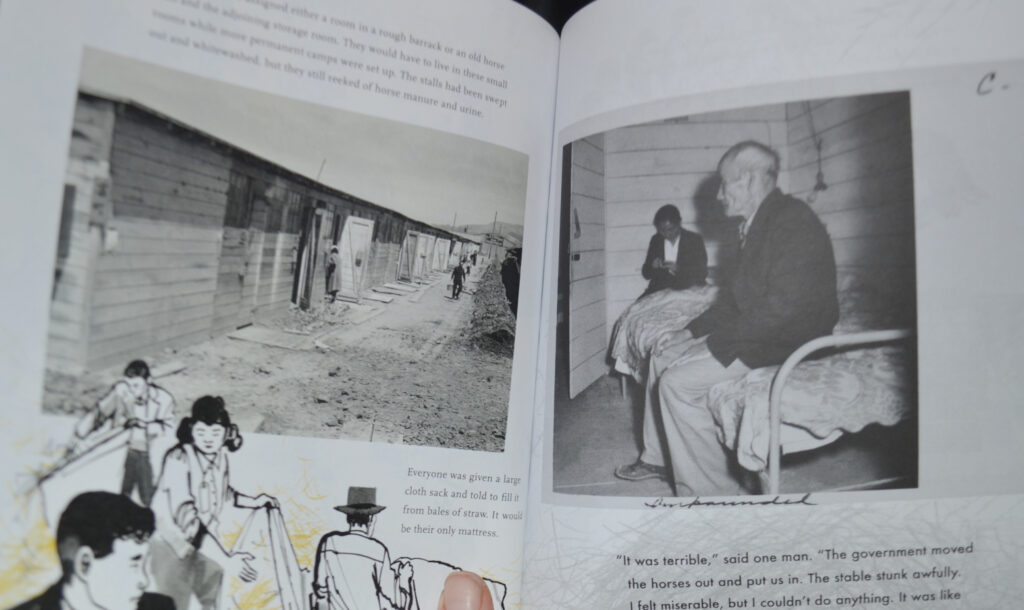
You’d think happily smiling faces would mean things were good in the camp, but as time went on in the camps, the incarcerated residents found ways to escape camp for a bit. And sometimes, smiles are put into places to hide fear within (which you’ll learn with the photos by Adams. Imagine… not knowing what you did wrong, and suddenly you lose everything and are stuck in a camp in the middle of nowhere. Treated poorly, feed basic camp rations, surrounded by barb wire, etc. Having your loyalty questioned continually and not knowing what you can say or do to prove yourselves. The fear and anger that would be part of your lives there. Imagine what that would do to you and your families. You will see this lived out in the pages of this photographic journal.
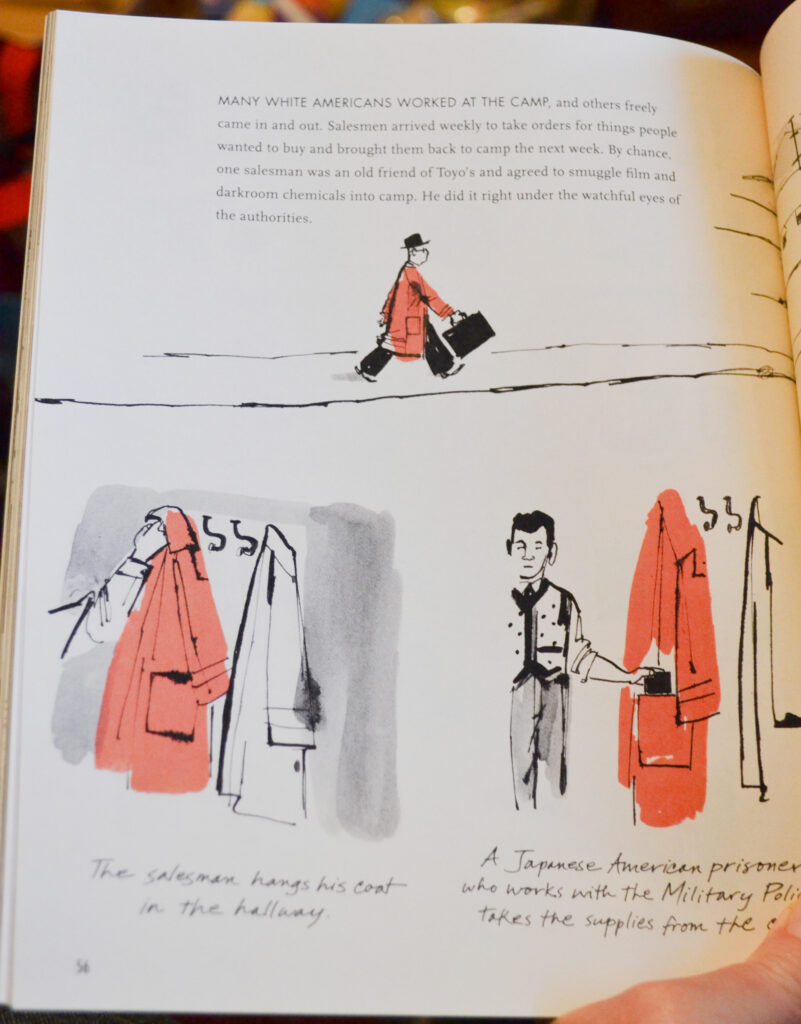
I very much appreciated that this journal was not just a series of photos, but actually told the story of what happened with whole families. American families, with American-born children. Trapped away from their lives, with no choices.
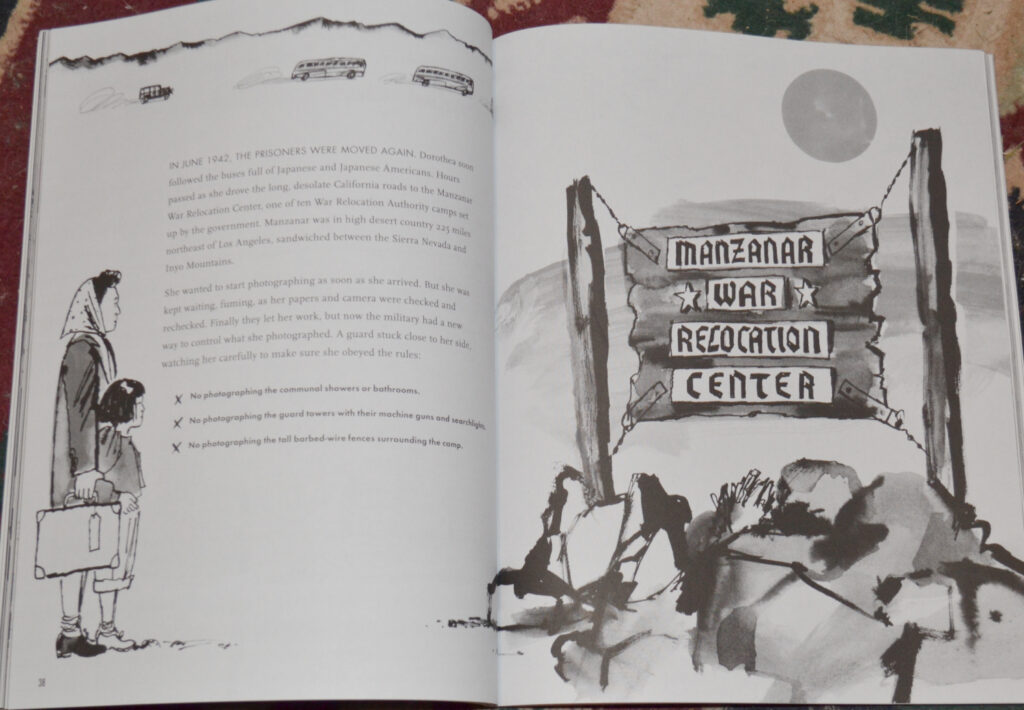
Aren’t the pages filled in with colour nice? The shades of orange highlighted over the yellow and black backgrounds. It feels very oriental, and yet, not. Respectful of the people involved, and yet showing the hardship they went through. I wish the whole book had been done in colour!
Helpful Additions
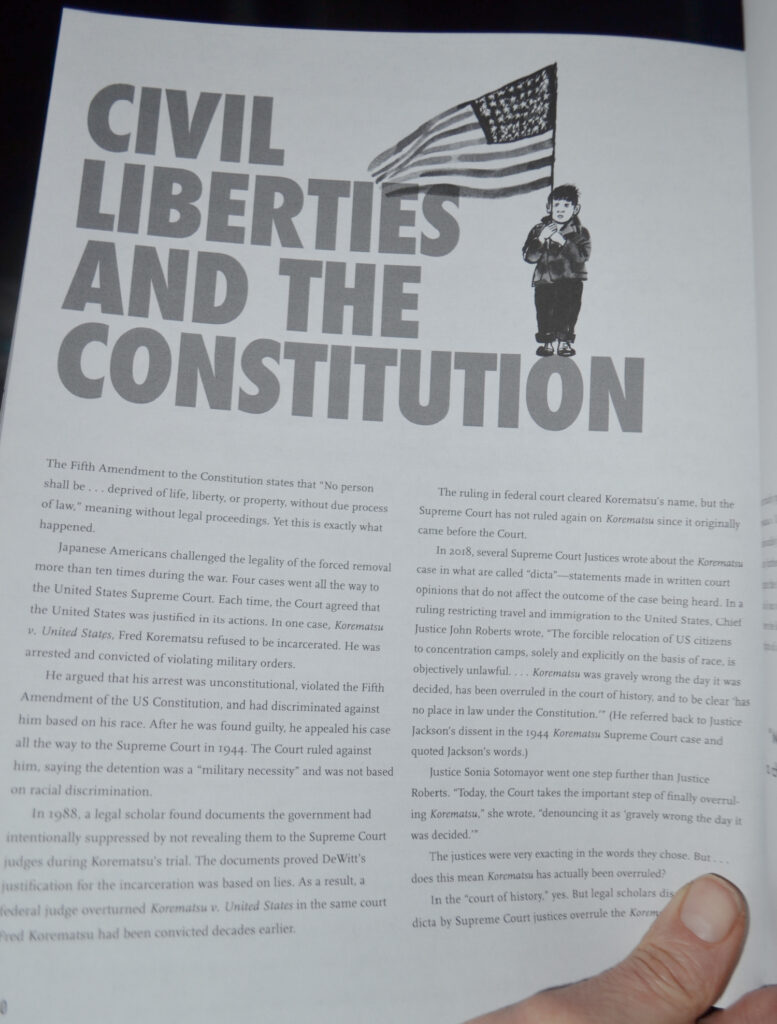
At the close of the book you’ll find a very helpful section that gives a bit more information into the history. The section includes
- After the War
- Why Words Matter
- Citizenship violated
- Civil liberties and the Constitution
- Biographies of the photographers
- Notes from the author
- Notes from the illustrator
- The damage of the model minority myth
- Photo Credits and Notes
Throughout this section, youth are helped to think through these issues. To consider the government’s actions, even despite the anxieties of the time.
The photos each of these journalists took has a different perspective to it. They each saw different things in this incarceration. Some the unfairness of it all, others the stark reality of life, and yet others a shaded perspective of resilience.
So, add it to your history lessons?
It is evident throughout that the author is unhappy with the US government for how they treated the Japanese Americans. That she wants her readers to stop and think about how the government acts. She uses language, drawings, and photos to help her readers think and to question what happened.
And books like these are helpful in presenting a broader picture than what you might find in a textbook. Combining this read with other middle school books such as Displacement and This Light Between Us will present a broader, richer experience for students. This fuller experience allows students to form a deeper understanding of the issues and become better critical thinkers.
Elizabeth Partridge did an excellent job of not only showing us history but also telling the story of how the authors got involved and how they were impacted. Seen and Unseen is worth using in your American and WW2 history studies.


I have found this episode of history so very sad. We can learn much from how this unfolded, both in the placement and the release of these Americans. It was definitely an ugly part of history but, as noted, much beauty arose from it.
it is very sad. But even in sadness… good things can be found.