Disclosure: I received this complimentary product (The Science of Babies) through Birdhouse Kids. Affiliate Links will be used, thank you for your support of my blog, costs you nothing to do so, and is so much appreciated. 
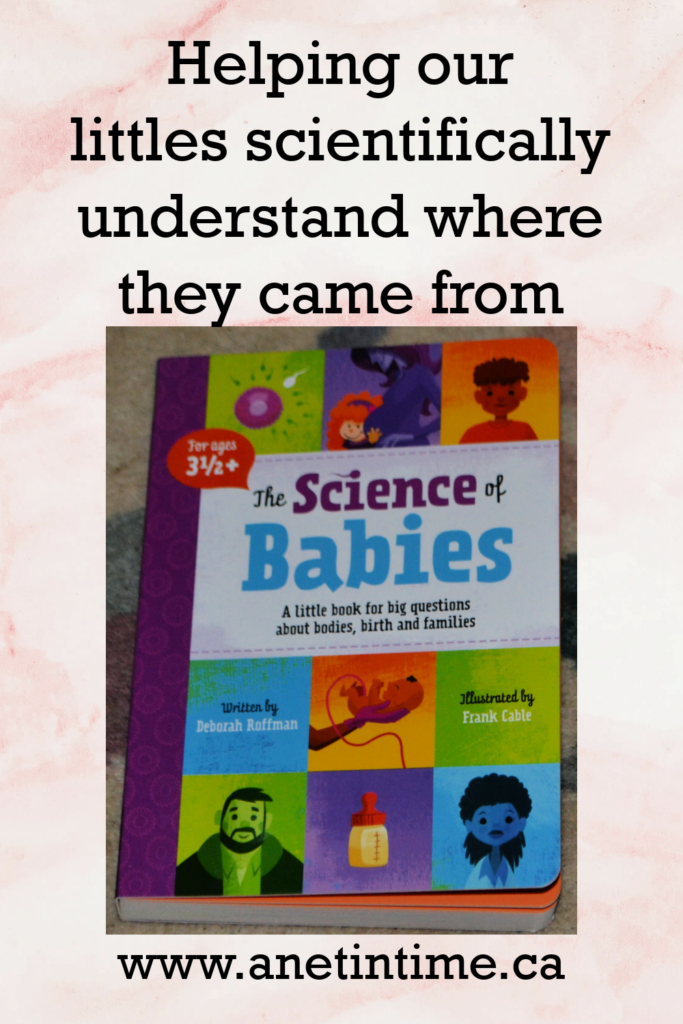
Children often want to know how they came to be, or even where babies come from. The Science of Babies gives parents a way to talk with their children about where babies come from and what they need. A board book so it gives little hands something they can touch, and play with, without damaging the book for others to use. This book takes a scientific approach and used proper terms when talking about how babies come into being. Shall we learn more?
A Brief Overview
The Science of Babies: A little book for big questions about bodies, birth and families has been published by Birdhouse Kids. 32 pages in board book style. Written by Deborah Roffman and Illustrated by Frank Cable. It is written for children 3 1/2 and up. Correct scientific terminology is used throughout.
Birdhouse Kids is located in Vancouver, Canada. Their goal is to create resources for parents and educators that help them introduce children “to the things in life that will make them accomplished, healthy, and happy.” Their focus is on early childhood education.
Looking deeper into The Science of Babies

The board book starts with talking about people are different on the outside, with body parts there, and also body parts on the inside. Children learn about how some body parts are private and some body parts are used by grown-ups to make new people.

Over the course of the book, children learn the facts about how the creation of a baby is accomplished. Including the pleasure it brings adults to do the work of creating a baby.

It’s not all pictures with a bit text, but sometimes mostly text with just a few images.
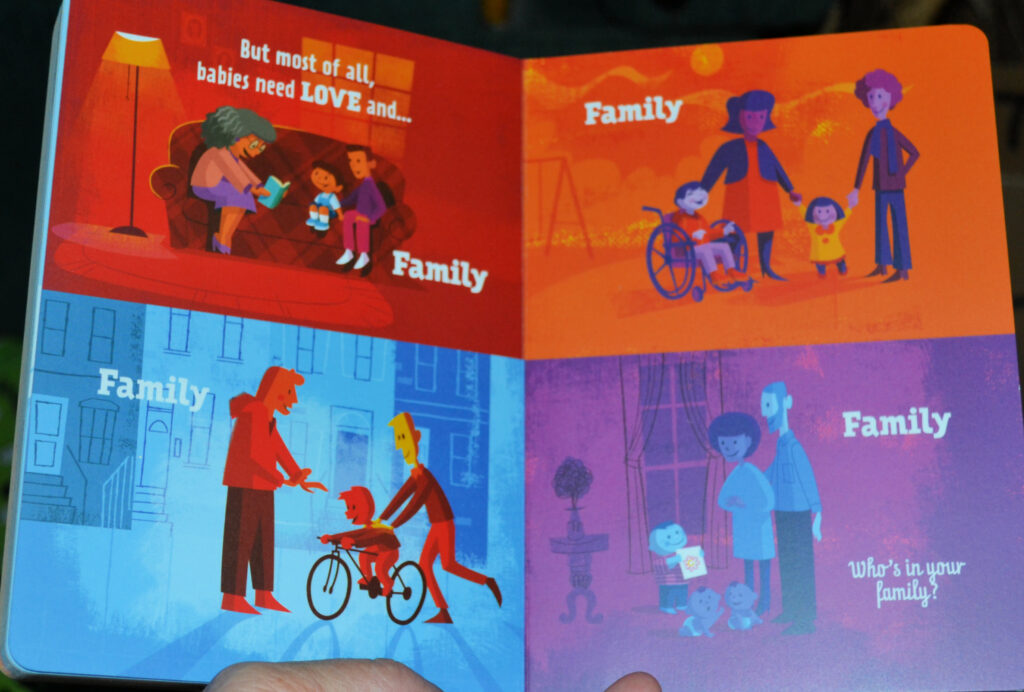
All types of families are included without labelling. So the reader is left to decide how those families can be described. This later part also includes what babies need: food, sleep, attention, and love.
What do I think?
I love how they specified that it is grown-ups who make children. And although I know the focus was on using scientific language I disliked how they talked about the baby being a fetus.
I was delighted that they focused on how it is a pleasure to create a baby, rather than focusing on just the duty, or how some babies are created in less than good circumstances. The authors avoid that hardness.
When it comes right down to it I’m not sure what I think of The Science of Babies. I love that they use proper terminology, and their focus on pleasure, and what babies need to grow. I think part of my hesitation is that I come from a faith-based perspective when discussing where babies come from. It’s not just the action and the pleasure in creating, but the love and desire of the parents in carrying that child through gestation and into growing as a person. I feel the lack.
It’s just “here are the facts” and oh, remember to love the fetus once it becomes a baby. Will it be helpful? Yes! Is it a good place to start? For sure. You can present this book within the context of whatever faith system (or lack thereof) that you hold to. You are given the language and the steps, so half the job is done for you. Then use your social context to make it fuller, fitting your family values.




This does look like a good place to start.
yes, that’s what I thought.
yes, that’s what I thought.