Disclosure: I received this complimentary product (Listen to the Language of the Trees) through Raincoast Books. Affiliate Links will be used, thank you for your support of my blog, costs you nothing to do so, and is so much appreciated. 
Too often adults dismiss the value of picture books when it comes to learning. It’s so easy to think, it’s a book for little children, what can I learn from it? What could a middle school or high school student learn? The thing about picture books is they contain bite-sized bits of learning that you might otherwise miss in a bigger, more wordy book. Those bite-sized bits can encourage anyone to look deeper into a new concept. In Listen to the Language of the Trees, I learned about the importance of the mycorrhizal network and about the work they are doing in labs, with an eventual look at field research.
The basic details
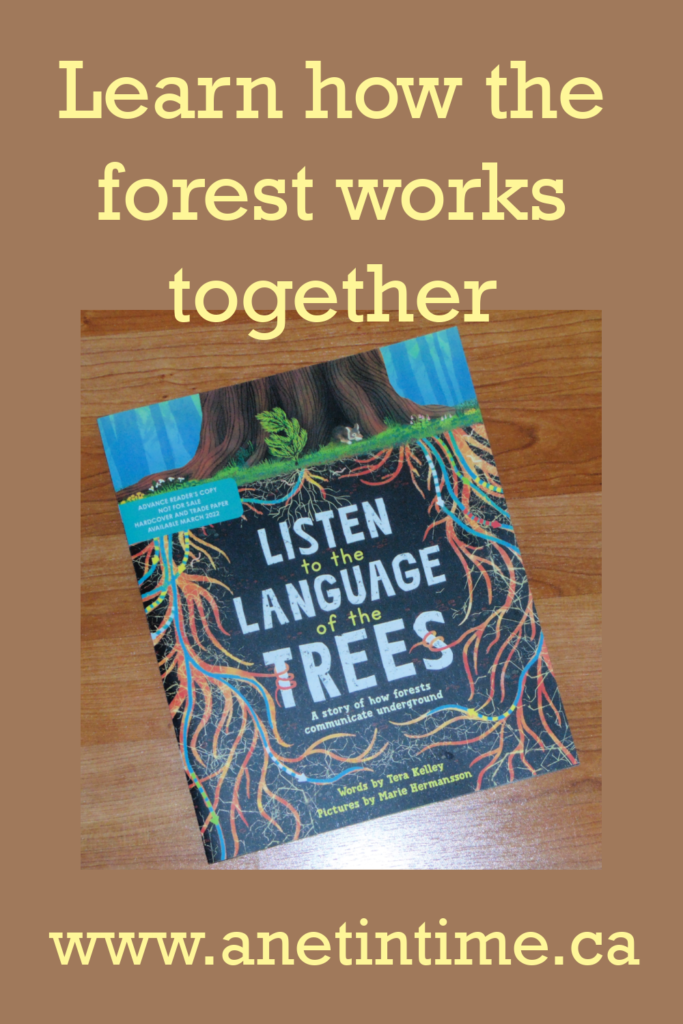
Today I am reviewing Listen to the Language of the Trees: a story of how forests communicate underground. My version is an ARC softcover that I am reviewing on behalf of Raincoast Books.
Sourcebooks for kids has, together with Tera Kelley, published a picturebook geared at children 4-8 years of age. 40 pages come complete with full colour images, a teacher/parent help section, and an activities area, you have yourselves a small unit study for young children. This same unit study will prove to be a great starting point for older readers.
Digging Deeper into Listen to the Language of the Trees
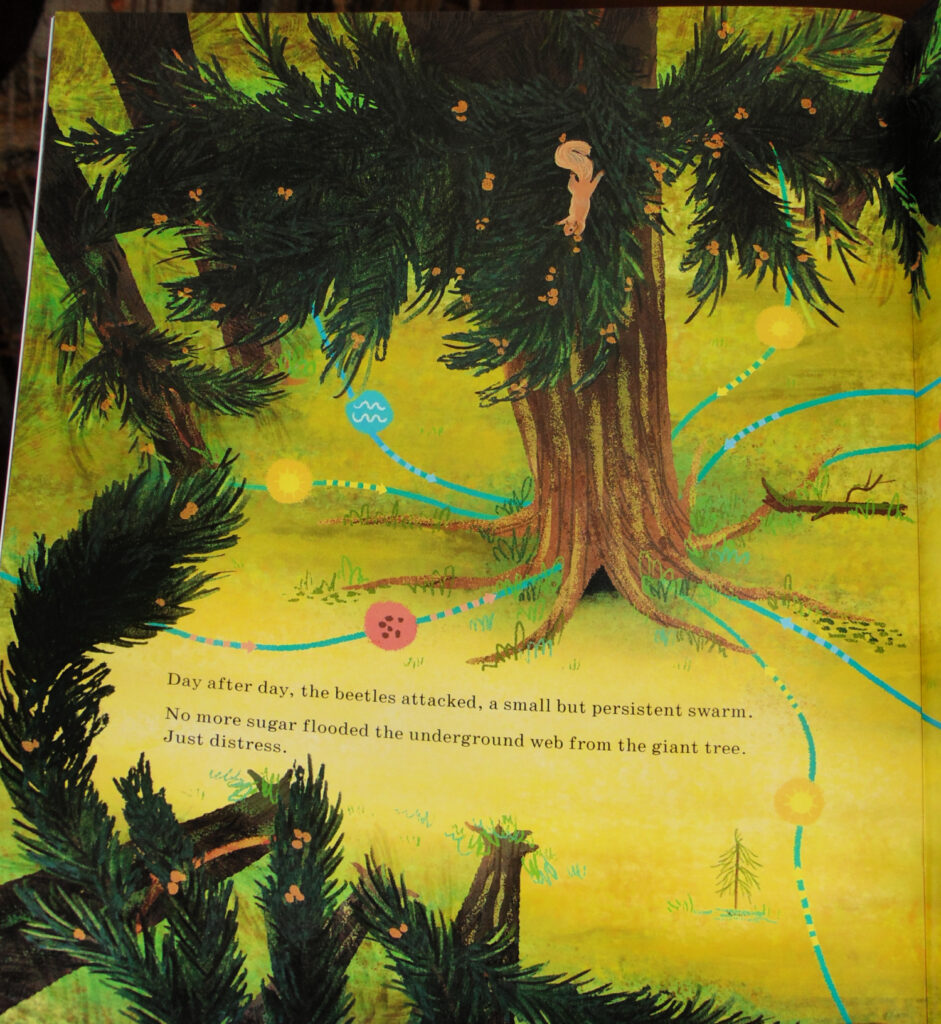
One of the items I appreciate in this book is the clarity of the images. Illustrator Marie Hermansson did an excellent job of conveying how support happened underground. Full-coloured illustrations demonstrate the path underground to help not only the little tree but also the big tree as well. Rather neat how the mycorrhizal network is run.
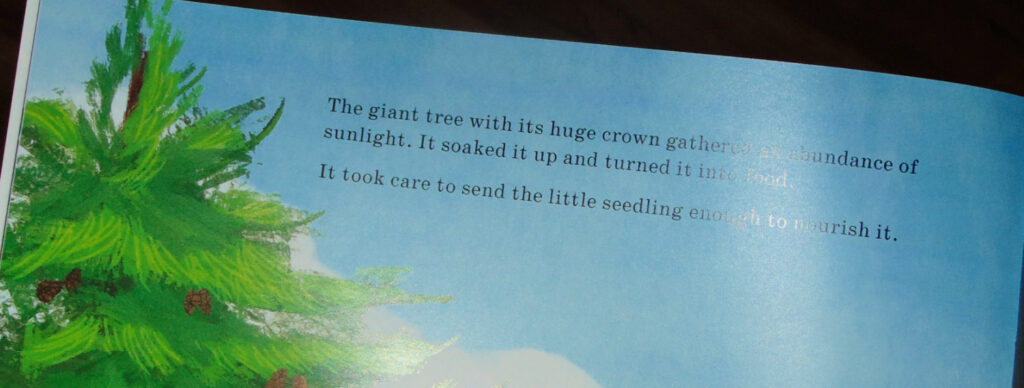
The font is clear and easy to read, I only wish it has been larger to facilitate reading this tome with a group of interested children.
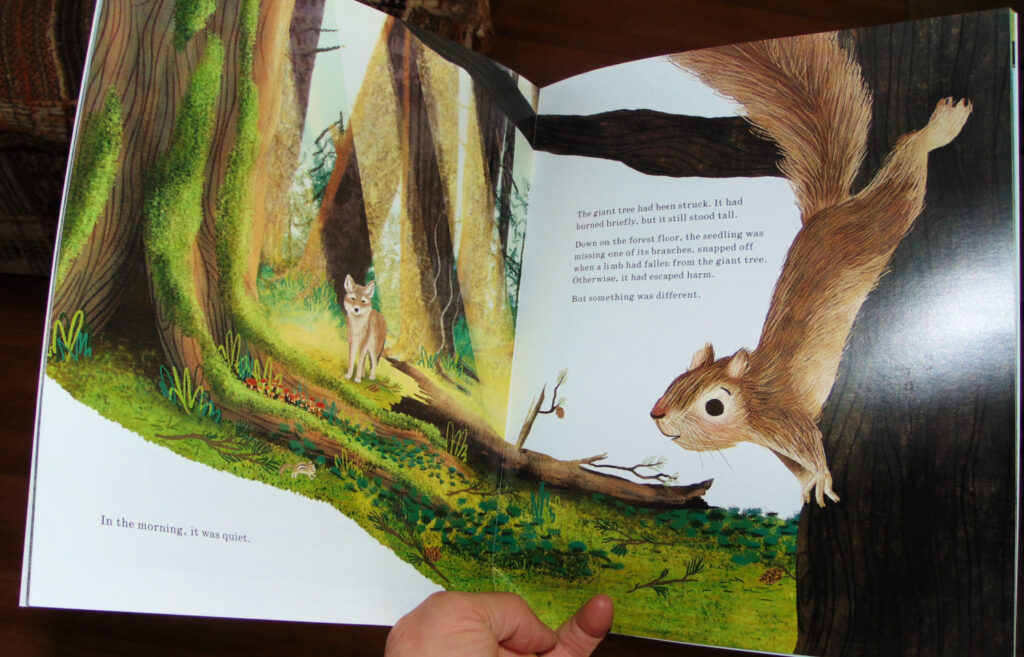
Do you just love the details? That squirrel! Oh my, I could have so much fun talking with a young reader about the squirrel and all the other details provided in these fantastic drawings.
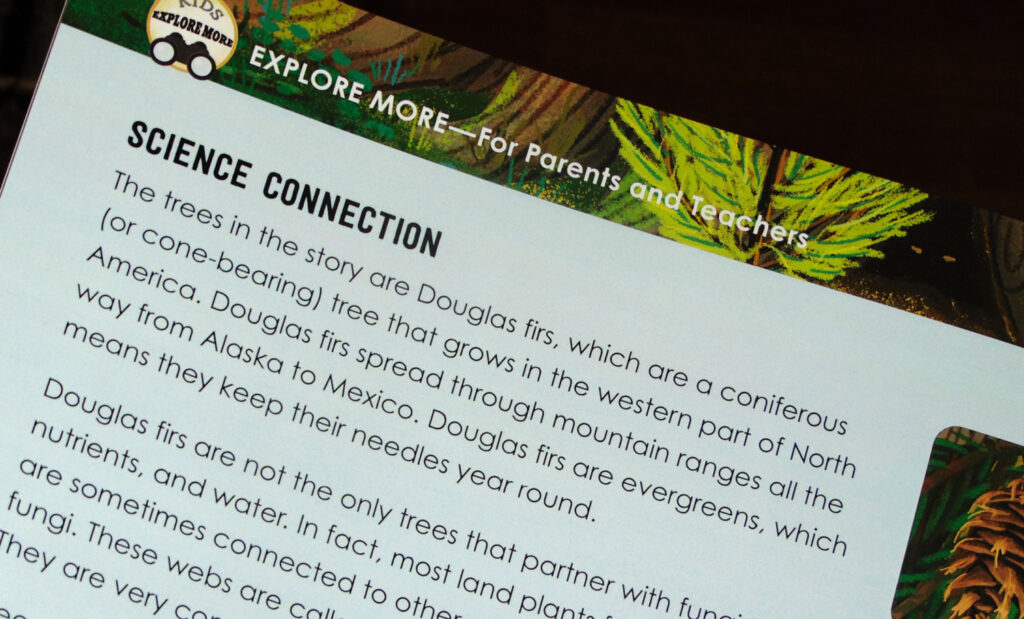
You’ll love the teacher/parent notes at the close. They are provided in three formats. One with easy cutouts with brief explanations, this is written mostly for children. The second, with more of an adult perspective, includes a more in-depth explanation of what they know and don’t know and how most research has been done in a lab. Real-world experimentation/observation needs to occur yet. And third, activities your children can do to add to their learning.
Add it to your shelves?
I have to admit, Listen to the Language of the Trees: a story of how forests communicate underground, surprised me. I was rather skeptical about the whole mycorrhizal network so it led me to do a bit of research on it. Such an interesting study! This video below is just brief intro.
So this is just a neat way to present this idea to children.
I think it would be fantastic to also use with middle school and high school students to peak their interest in the unexpected connections in life. My son in his biology class learned about the classic sea anemone and fish that co-exist and other symbiotic relationships. Who would have thought that fungi could also do such things? Rather interesting no?




I love picture books!
so do I…. especially informative ones!
Sometimes a picture book makes things clearer than an encyclopedia ever could.
very muchly so
Ooh – I want to read this one. I have found this network of trees so interesting since I first heart about it.
yes! Go read it! fascinating!