Disclosure: I received this complimentary product for A Kids Guide to Plants of the Pacific Northwest through Harbour Publishing. Affiliate Links will be used, thank you for your support of my blog, costs you nothing to do so, and is so much appreciated. 
I ADORE books that seek to teach in practical ways as well as educate. A Kid’s Guide to Plants of the Pacific Northwest is a fantastic book, complete with teacher’s guide filled with cool facts, activities and recipes to delight the reader. Reading through this paperback makes me wish they had one called “Plants of Ontario!” Although, observing the layout and activities I’m sure it could be adapted! 🙂

The Basic Details for A Kid’s Guide to Plants of the Pacific Northwest
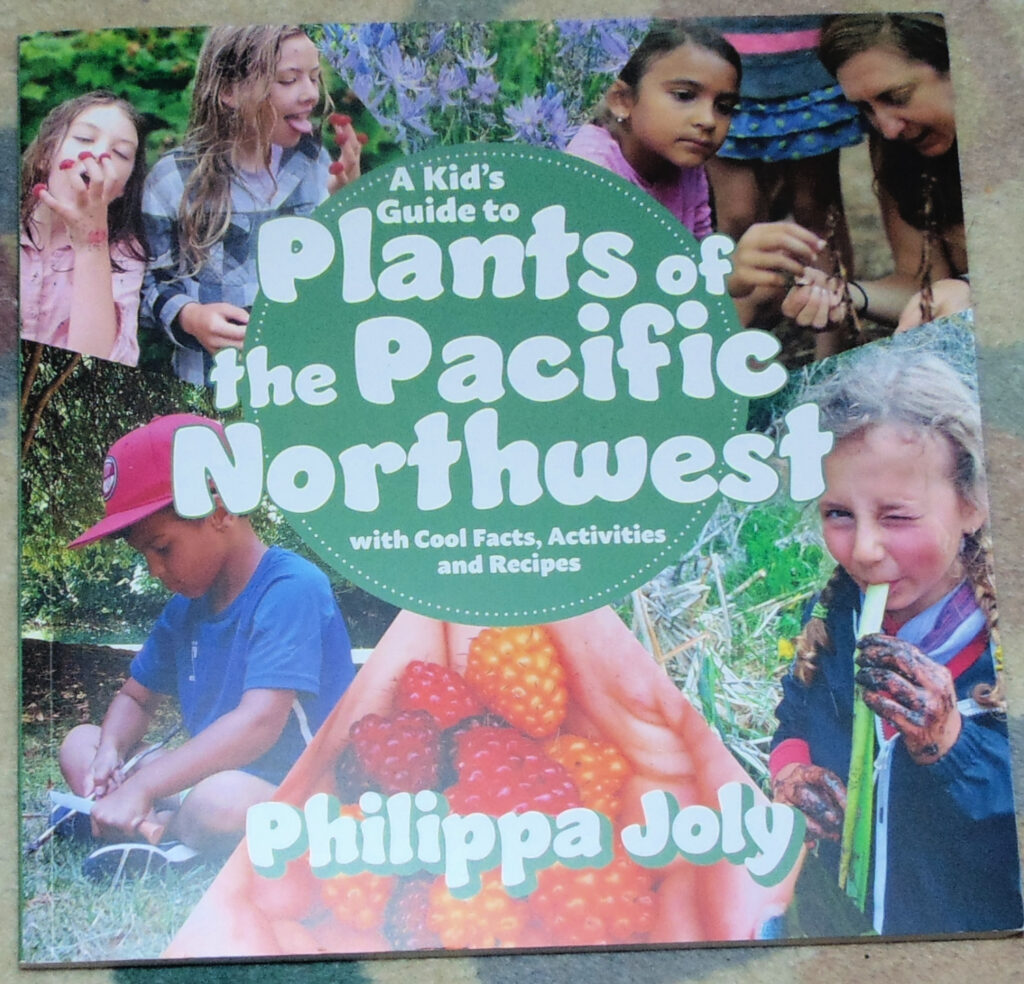
Title: A Kid’s Guide to Plants of the Pacific Northwest
Author: Philippa Joly
Publisher: Harbour Publishing
Pages: 192
Intended Audience: 6-12 years, grades 3-4
Formats Available: Paperback
Genre: Pacific Northwest, Plants, Flower and Plants book, Children’s plant books, Environment and ecology, children’s activity books,
Reviewed for: Harbour Publishing
Copy Received: Paperback
Author
Running an outdoor school for children, and leader of workshops, Philippa Joly uses her education and a clinical and community herbalist, paramedic and outdoor educator to open up nature to children. She lives in British Columbia with her plant-savvy daughter and cat. Ms. Joly delights in helping people understand the healing properties of the plants around us while teaching about ethical wildcrafting. You will see her knowledge brought out in A kid’s guide to Plants of the Pacific Northwest
This Resource
Encourage your children to get outside and enjoy the weather and nature as they take in the world around them in the Pacific Northwest.
Plants surround us wherever we are, and using them we can boost our children’s self-confidence, increase their attention spans and their physical well-being. This book helps our children appreciate the world in which they are growing up in.
Looking More Closely
I have enjoyed walking the trail near my house, figuring a berry I would eat regularly were some type of raspberry. In reading through A Kid’s Guide to the Pacific Northwest I learned these berries are blackcap raspberries. Fantastic to learn eh?

Discover within, recipes, games, mysteries, personal anecdotes, crafts and so much more. You can even learn how to make your own salves! Plantain grows all around where I live so this would be rather cool to try don’t you think?
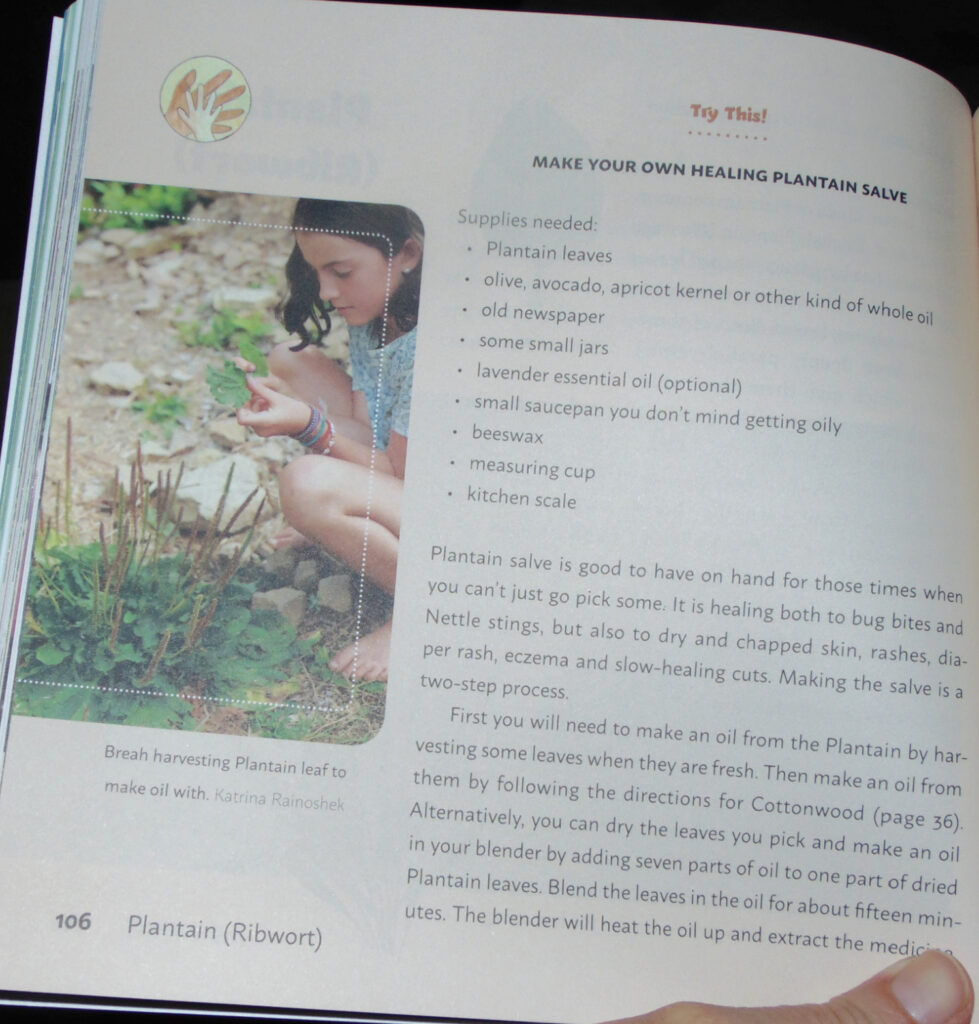
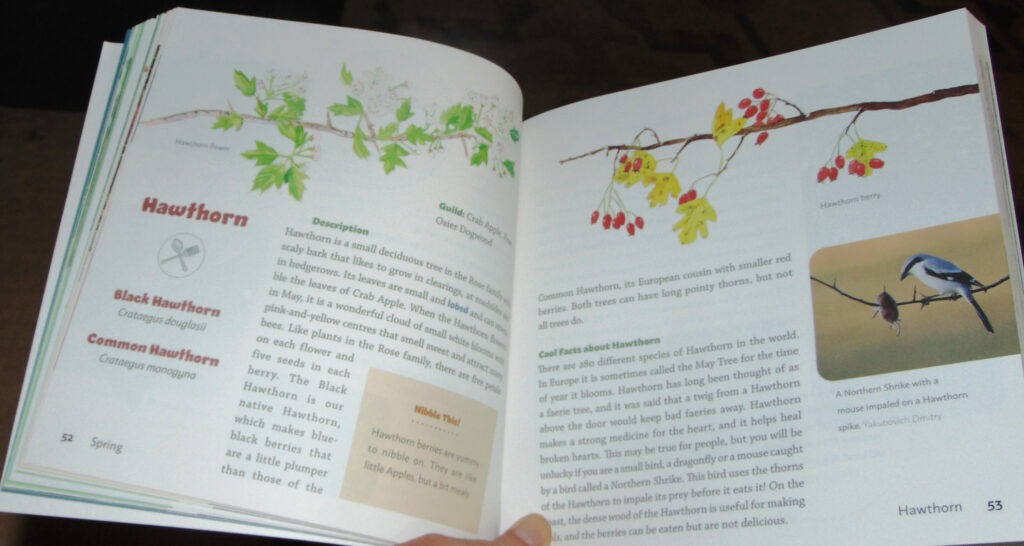
The font is easy to read. The copious use of images and photos makes it so easy to follow instructions or to learn what the plants are you are learning about. Latin names, pictures of leaves and berries, wildlife you might see around, and so much more.
Personal anecdotes add such a nice touch, drawing out stories from the reader itself. Drew to mind a time when I was out walking in the bush and came across a youngish possum hiding in a stump. The sheer amount of noise coming from such a small critter. You would have thought it was a small bear! 🙂 I thought for sure it would play dead but it chose to hiss and hiss at me.

Plant profiles are divided into seasons, spring is probably the biggest section. You’ll also find chapters dedicated to the indigenous peoples of the area, the regions covered, the dos and don’ts of wildcrafting, plant families and guilds, poisonous plants and invasive plants.

At the close you’ll find a glossary, a plant quiz, suggested readings and comprehensive index.
What do I think of a Kids guide to Plants of the Pacific Northwest?
A Kid’s Guide to Plants of the Pacific Northwest is a fantastic resource for teachers, or parents, wanting to ensure their charges/children learn more about plants in this area. With interesting facts, a variety of activities and yummy recipes, this book is sure to please! With all the work done for you it makes it easy to review, gather supplies, and let your children learn.
Don’t think this book isn’t helpful if you don’t live in the Pacific Northwest. Many of these plants grow in a wider area. I live in Ontario, not in British Columbia through to California. And just think of the ideas you will get! And the fun you will have with your children learning the value in the plants around you. 🙂 Add this resource into your bookbag as you conduct your nature studies.