• Skip to secondary menu
  • Skip to main content
  • Skip to primary sidebar
  • Skip to footer
  • Home
  • About Me
    • Privacy Policy
    • Disclaimer, Legal and Media Kit
  • Blog
  • Contact me

A Net in Time

Curriculum and book reviews, faith, homeschooling and more!

  • Art
  • Blogging Helps
  • Faith
  • Homeschooling
  • Poetry
  • Recipes
  • Reviews
  • Writing

Spiders

variety in homeschooling

May 16, 2012 By Annette1 Leave a Comment

dominoes and physics. this led of course to our own experiments, and learning about energy. πŸ™‚
The lad worked on math reflex while I got the dishes all caught up.
then we laughed at some pandas

then since the lad was having a difficult day (tonsils are swollen and sore again) we decided to pursue a passion.
we studied spiders by playing around on the web.
we learned that they have three sub-orders
  • Araneomorphae – most spiders

  • Mesothelae – primitive spiders

  • Mygalomorphae – tarantulas 

Then we looked a whole ton of pictures and selected a few to find out where they come from giving us a chance to use our mapping skills.  

 We watched some you tube videos.

this is one with a bunch of pictures of mygalomorphs.


and then we headed off to do some reading.  πŸ™‚   Always good to read.  

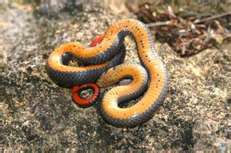
“Mommy!   Can we learn about a snake today?” was the plea.

“Sure” I replied.. so we learned about the ring-necked snake. 

 See here for the source.

We started off our story reading from 50 magical stories.  The story today was called The half-chick.   It was a funny story and “explains” why chickens are used as weather vanes.  It just made us laugh.


From there we moved on to Classical animal stories”   The Death of Gellert was a very sad story that immediately had my son thinking up a different ending to it.

From our world history book we have started to learn about the different types of weapons people have used throughout history.   Today we learned about how weapons can be made from stone.. especially from Flint which is a hard stone that is easily chipped away at to make a pointed stone.  


Filed Under: Uncategorized Tagged With: Geography, history, math, Science, Spiders

Spiders

May 1, 2012 By Annette1 Leave a Comment

Seeing as the project fair is coming up this Friday night I thought ACK!!!   We need to get our spider study done!!!!!!!!

So today I set out to find spider crafts that the lad and I could do.

that and some cut and paste pictures we could put on file folders and what not. πŸ™‚

I found this dot to dot.    

A poem we can use for copywork

Spiders
By Janet Bruno

Spiderlings hatch from eggs.
Each one has eight tiny legs.
A spider has more eyes than you.
Most have eight, you have two.
A spider has two body parts.
Across its web it quickly darts.
From a spiders spinnerets
Sticky spider silky jets.
Spiders feel the frantic tugs,
Of their favorite food: its bugs!

 we used a copywork generator to make the sheet for the lad to trace.
Since there are all kinds of spider webs we decided it would be fun to see if we could replicate some.
Ergo we found the following crafts.
For a sheet/triangle web we found this one.

For an orb web this one or this one and this one.

Couldn’t find a craft to do a tangled web, but I’m thinking of using spaghetti and then letting the lad dangle it around a balloon and just seeing how that works.  or maybe yarn as it’s already in the house. πŸ™‚  I got the idea from this page.

we hit upon the idea of making a funnel web using lego.   We looked up images of a funnel web and made one.  The lad is not too sure about the results of our work though so it might not come along to the project fair.   Since that was in issue, we used our brains and came up with this rather cool depiction.

when we finished making these things we did some cutting and pasting with lap book materials to make some spider pages.  We need to do some fine tuning on them yet though.


we are hoping over the course of the week to make more webs and to show different ways that spiders can live.   We also hope to catch a few spiders.

Filed Under: Uncategorized Tagged With: Copywork, Science, Spiders

plans change

February 16, 2012 By Annette1 Leave a Comment

Our plans for the day changed

We had planned to go to Dairy days with the homeschool group.  But it was cancelled due to weather issues

So this morning we went skating.
Then played lego.  We built, we discussed, we had fun.

Then we set off to work with our Spiders Unit Study.


The lad’s question of the day was Where do spiders go in the winter?  the answer from here.

Did you ever wonder where all the spiders go in the winter? 
(Excluding those little rascals you still find occasionally in your
house!)  Do they die?  Do they hibernate? Do they just hide somewhere
where you don’t see all of them?
Different types of spiders
handle the winter months differently.  There are those spiders that like
to come on in and dwell with us in our nice warm homes.  Others,
however, will die in the winter but leave their egg sacs well protected
to hatch out the next spring.  Some actually do prepare for winter by
weaving a web under loose bark or building overhangs where they are
insulated from the cold

This of course inspired a game in a young lad’s mind.  Let’s pretend to be spiders trying to get to winter safety without being caught by an enemy.  so we played a few rounds of this.

today we learned about the lifecycle of a spider.

We talked about how spiders are both prey and predator and the lad made the observation that this happens alot with animals..but it doesn’t happen with robots (because nothing eats robots).

we read the story by Eileen Snyder called   The Little Old Lady Who Liked Spiders

So then the above game became can you avoid the lizards who just might eat spiders?   So we played that was well.

I expect that soon my voice will be back to normal and we can get back to our regular reading times.

Filed Under: Uncategorized Tagged With: Lego, Physical Education, Spiders

Skating, Spiders and Open Houses

February 2, 2012 By Annette1 Leave a Comment

We did our normal reading
10 minute stories

Today’s story was about sea babies and was somewhat … odd.  that would be a good word.  πŸ™‚

World History

We continue to learn about Knights and Castles.

Then off to go skating with a friend.  We had fun, this was followed by lunch and a sword fight interspersed with lego and playing with baby guinea pigs. πŸ™‚

 after our company left we learned a bit more about spiders!

Brown recluse spider and black widow in hand.

we also learned a surprising fact about tarantulas.

We also took some time to play with a robotic bug and learned that it can break out of popsicle houses and that given sufficient time can get out of any maze we were able to build for it.

Later this afternoon we have an open house to go to.   So all in all a busy day.

Filed Under: Uncategorized Tagged With: history, Physical Education, Spiders, What we Learned Today

Spiders and Lego

January 24, 2012 By Annette1 Leave a Comment


At breakfast we did our normal reading

10 minute stories

Today’s story was about a fellow who was very lazy and how he learned not to be so very lazy.   The lad says “I liked it!”

World History

We continue learning about Knights and Castles.  Today we learned about how a person learns to be a knight.

Link
We continued work on our spider study
The lad was very eager to do this. I had promised him that we could play with Lego today and build spider webs and a spider with it today. πŸ™‚ Here’s to creative thinking! πŸ™‚  So today we focused on learning about different types of spider webs.

Webs have different purposes, according to the individual species of spider, how it captures or stores its prey. Spider’s silk can be used to help small, young spiders transport to new areas (ballooning) or be so strong that it is used to make fish nets, as with the Nephila spider web.
Other types of spider webs:

Tangled Web Spiders
Tangled spider webs consist of a shapeless jumble of threads 
attached to a support such as the corner of a ceiling.  Cobwebs are
tangled webs that have collected dust and dirt. 
Cellar spiders, the comb-footed spiders (included black and brown widow
spiders), the ogre-faced stick spiders and common house spiders are
spiders that make these types of webs. 


 Sheet Webs

Sheet webs are flat sheets of silk between blades of grass or
branches of shrubs or trees. Spiders that create sheet webs also spin a
net of crisscrossed threads above the sheet. 
When a flying insect hits the net, it bounces into the sheet web.  The
spider, which hangs upside down beneath the web, quickly runs to the insect and pulls it through the webbing. 
Sheet webs last a long time because the spider repairs any damaged parts. 
The bowl & doily spider, the filmy dome spider, and the platform spider form sheet webs.


Gum-footed Webs

Gum-footed webs consist of tightly woven silk strands attached
between two branches. 
The upper strands are dry and built in sheltered areas away from
sunlight while the lower strands are built in exposed area and run down
to a bottom branch where they are attached. 
Each of the lower sticky strands are covered in sticky droplets and are
attached weakly at the bottom. 
When an insect walks into the sticky silk strands its struggle break the
lines moving the web upwards and lifting the prey off the ground
reducing its chances of escaping.
Redback spiders create gum-footed webs.

Horizontal Line Webs

Horizontal Line Webs are made up of one simple line of
sticky droplets stretching across low vegetation, bark and leaf litter. 
Spiders that create this type of web pull the line taut by keeping the
slack silk underneath them until an insect hits the line. 
When that happens, the loose silk whips along the line and tangles the
prey. 
Cribellate spiders and other pea-sized spiders create these webs.   Pic from here.


Bolas Spider Web

The Bolas Spider Web is a very simple web designed for
their unique method of hunting. 
In order to hunt and catch male moths, the bolas spider sits on a
horizontal line and spins a single line with a sticky silk tip that
dangles from its leg. 
While
waiting, this spider will emit a scent similar to a female moth.  When
the male moth comes toward the spider, the spider swings the sticky
strand in a circle and captures the moth, pulling the strand in to feed.


Triangle Webs

Triangle Webs are created in the shape of a triangle, hence its name. 
The spider weaves silky strands of spokes and spirals that connect to all three strands. 
The triangle spider waits at one end of the web for an insect to land. 
When it does, the 


spider shakes the web so the insect is caught and cannot
escape.

quite fascinating all in all. hard to find images of all the different types of webs. As I find them, I’ll add them in. πŸ™‚

We built a couple of lego webs complete with spiders.  

And then did some spider math.  I started out with 10 spiders sitting in a tree and then a variety of things happened, at one point we were up to 54 spiders in the tree and eventually got down to 0 spiders in a tree.  All done verbally and mentally with the occasional bit of help from a calender and pencil…he is only 6 after all!  πŸ™‚

Filed Under: Uncategorized Tagged With: Lego, Nature, Spiders

Skating, Spiders and more

January 11, 2012 By Annette1 Leave a Comment

At breakfast we did our normal reading

10 minute stories

Today’s story was about the littlest mermaid. he stopped eating so he could listen and said “i liked that story.”

World History

Today we learned about what vikings did when they died. Bodies were treated very respectfully and generally burned at sea or on wood platforms.

Today we took advantage of the free skate (parent/child/senior) at the local rink. We had a good time. It is good to see the lad getting better at his skating all the time. At times he was skating independently, and frequently he can make it around the rink without falling. So nice to see him improving his skills.

We then moved on to working with math using reflex. He continues to gain in fluency.

We then started out spider study. Click on the picture to learn where to purchase it.

This is an ebook. You need to print off the learning activities that you wish to do. You can put it into a file folder or use paper to make it into a small book. entirely up to you. I asked the lad what he wanted to do.. “put it into a file folder mommy”. it’s all good to me.

so today we read a poem Don’t Eat Spiders – by Robert Hiedbreder


Don't Eat Spiders   By Robert Hiedbreder
Daddy said to me, "Don 't eat spiders, Don 't you dare.
They may be delicious, But I don't care.
Don't eat spiders, Alive or dead,
Don't eat spiders, That's what I said.
Don't eat spiders, Even in play,
Fried or mashed, Or in any way
Don't eat spiders, That's what I say.
Never, ever, That's what I say!"
But I answered Daddy, "Tell me why !
Will I get sick ? Will I die ?
I'll eat spiders, I don't care.
I'll eat spiders On a dare".
I ate a spider Off the ground.
I swallowed a spider, It wriggled around.
SUD-DEN-LY..... I grew eight legs,
They're skinny and hairy.
I shrank to a spider, Creepy and scary.
I sit in a web, I eat dead flies,
I watch the world With eight beady eyes.
So don't eat spiders, I hope you see,
Unless you want to be A spider like me.
And don't eat spiders. Do you see?
Cause if you eat spiders You might eat me!

This poem made the boy smile. It really caught his imagination.

We learned that spiders come in: yellow, grey, brown, black, white, orange, red, and green.

While he was colouring the above I used these questions to stimulate his brain. πŸ™‚

What if there were no spiders in the world?
– we’d have a fly planet and we would have a cloud of flies

– web, house, spider, fear, flies, jumping.

A spider makes me think of
… interesting ones in the garden.
…webs
…webs in my hair!
…flies and mommy being scared. πŸ™‚

– I would tell them about the spider in case they are scared of them.

How many ways can you get a spider out of your bed?
– spider treats
– slide a paper under him and take him away
– catch him in a jar

We learned some vocabulary: acre, molt, carnivores, oviparous, and arachnids.

And all spiders have these common characteristics.

ο‚· All have eight legs
ο‚· All belong to the arachnid family
ο‚· All have two main body parts
ο‚· All spin several different kinds of silk, although not all produce webs
ο‚· All have fangs
ο‚· All make venom to paralyze or kill their prey
ο‚· All are carnivores
ο‚· All are oviparous
ο‚· All molt several times during their lifetime

From a spider unit study i picked up at a yard sale this summer we found the letters to spelling out spider. This gave the lad a chance to sound out the word spider.

It was a good start to a study. It will take us a few days to finish it.

Filed Under: Uncategorized Tagged With: In the Hands of a Child, Science, Spiders, Unit Study

Primary Sidebar

ABOUT ME

I am centered by the love of God and family. Smiles are brought about being a Writer, Poet, Hiker and reader. Growth occurs as I educate my son, raise him up in the fear of the Lord, love up on my critters and live as a pastor’s wife.

Want to Stay Informed?

Subscribe and I’ll shoot you an email once a week.


Thank you!

You have successfully joined our subscriber list.


Recent Posts

  • A Shift in Perspective
  • Affording Emergencies
  • Obey God Not Man
  • Just a Phase
  • What Route Should I Take?

Recent Comments

  • Annette1 on A Shift in Perspective
  • Annette1 on A Shift in Perspective
  • Sandra K. Stein on A Shift in Perspective
  • Tami on A Shift in Perspective
  • Annette1 on A Shift in Perspective

Archives

Categories

  • Art
  • Art Books
  • Blogging Helps
  • Faith
  • Homeschooling
  • Poetry
  • Recipes
  • Reviews
  • Uncategorized
  • Writing

Footer

Amazon Affiliate information

A Net in Time is a participant in the Amazon Services LLC Associates Program, an affiliate advertising program designed to provide a means for us to earn fees by linking to Amazon.com and affiliated sites

Tinker Crate Affiliate

Copyright © 2026 A Net In Time. All rights reserved. All text, photographs, artwork, and other content may not be reproduced or transmitted in any form without the written consent of the author. A Net In Time Β· Lifestyle Pro - Child Theme On Genesis Framework Β· WordPress Β· Log in